
Mid-Month Update - January 2026 Market Overview & Positioning

January 2026
Market Overview
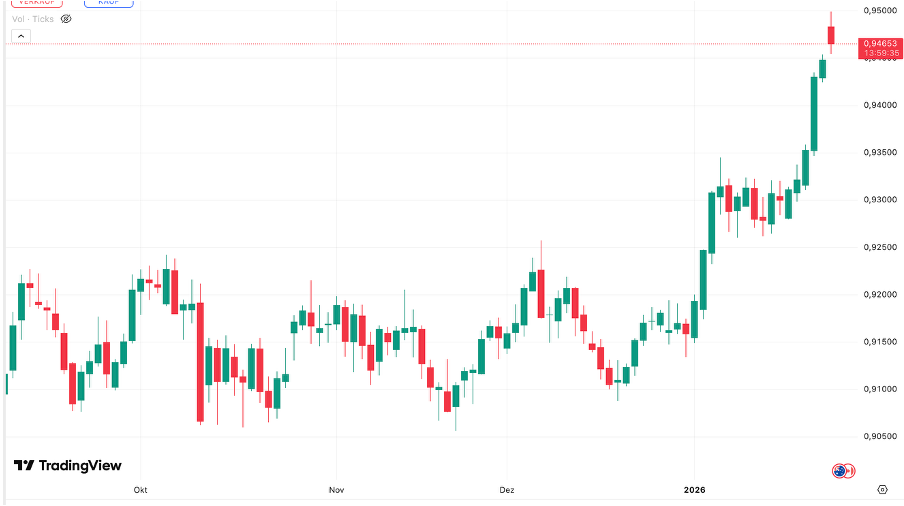
As we open the year and move through January, several V-series systems have felt the impact of a sharp pickup in equity-led volatility. A convergence of macro forces created a brief “perfect storm” for select FX crosses—most notably AUDCAD and NZDCAD—producing rapid, directional moves. A mix of Fed leadership speculation, a precious-metals surge, and diverging central-bank outlooks drove extraordinary swings in instruments that are typically stable. Below, we break down the drivers, the current state of play, and our outlook.
USD Catalyst
The market is increasingly focused on the upcoming Federal Reserve leadership change. Chair Jerome Powell’s term ends in May 2026, and the President is expected to nominate a successor perceived as more dovish. That uncertainty, combined with shifting expectations around the pace of future rate cuts, has kept downward pressure on USD demand.
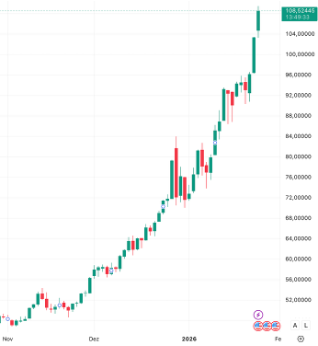
Precious metals responded immediately: silver jumped toward $99/oz at one point, and the broader metals complex rallied as the weaker dollar provided additional fuel.
Precious Metals Surge
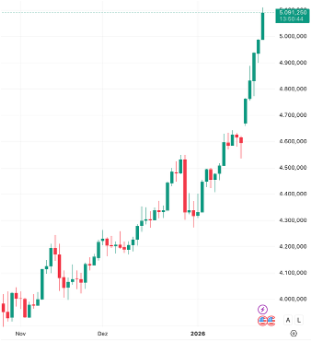
The metals bid that began in 2025 has accelerated. Spot gold finished 2025 up ~85%, while silver gained ~250%. Year-to-date, gold is +17.7% and silver +51.7%. This week gold broke above $5,000/oz and silver surged past $105. Such outsized moves have supported commodity-linked currencies, especially the Australian dollar, given Australia’s resource-heavy export base.
AUD & NZD Strength
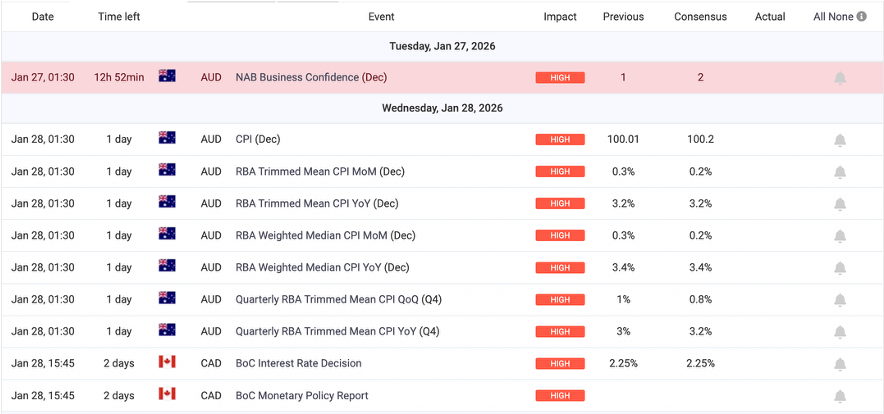
The RBA signaled that inflation risks have increased after hotter Q3 and October prints, prompting markets to consider rate hikes in 2026. In a recent survey by The Australian Financial Review, 17 of 38 economists expect at least two hikes over the next 18 months; several major banks see the possibility of an increase as early as February 3. That repricing, layered on top of the metals rally, helped propel AUD and NZD.
System Impact & Outlook
The exceptional directional burst caught some mean-reversion components mid-cycle. Mechanically, this morning’s gap and wider spreads triggered:
- One subsystem hitting a stop-loss without hedge protection due to spread elevation.
- Another subsystem de-risking via internal limits, realizing a smaller loss.
Contextually, the magnitude relative to medium-term ATR was comparable to the April 2025 tariff-shock that produced a brief drawdown spike. Several subsystems still hold positions; by design, diversity in entry/exit logic provides natural staggering and risk dispersion. We have:
- Validated stop-loss/hedging levels across affected models.
- Reduced volume in components that could inadvertently add exposure.
- Maintained cross-system diversification to mute single-theme risk.
Scenario Pathways
- Metals pullback / USD stabilizes: A moderation in gold/silver or a pause in Fed easing could cool the risk-on impulse. This would likely relieve upward pressure on AUD/NZD, supporting our short AUDCAD and NZDCAD bias.
- CAD recovery extends: Rate differentials and longer-term technical momentum favor a gradual CAD rebound. Many Canadian banks expect USD/CAD to drift toward 1.3500 over coming months—constructive for AUDCAD/NZDCAD shorts through the CAD leg.
- RBA rhetoric softens / data cools: With some inflation lift driven by volatile components, a cautious RBA tone after late-January data could see AUD give back recent gains. In speculation-driven markets, pre-event repricings often mean-revert on the actual release.
Current Positioning & Risk Controls
- We continue to actively monitor all open positions.
- Size has been trimmed where model logic flags elevated correlation or spread risk.
- System-level diversification remains intact; no single subsystem dominates portfolio risk.
- Execution is being reviewed in real time to ensure fill quality during wider-spread periods.
Bottom Line
The first stretch of January delivered an unusual, metals-led impulse that cascaded into AUD/NZD strength. Our playbook emphasizes measured de-risking, diversified entries/exits, and disciplined stops, positioning us to participate in a normalization phase should metals cool, USD stabilize, or CAD strength resume.
We will issue another note if conditions change materially. As always, if you would like a deeper look at exposures, attribution, or subsystem status, reply to this update and we’ll share the latest analytics.